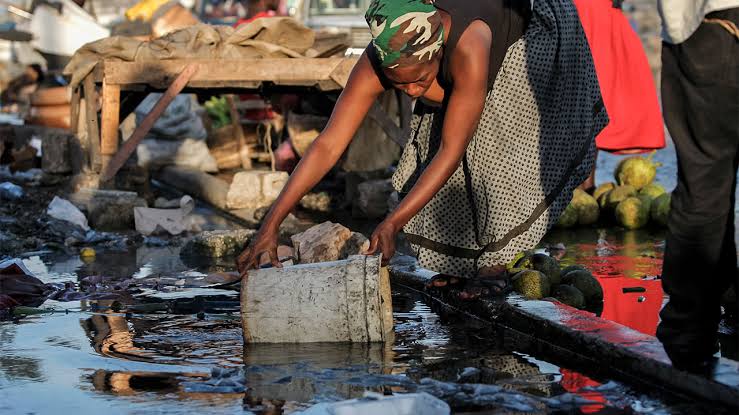
The World Health Organization (WHO) has confirmed that at least 120 people have died and 1,102 suspected cholera cases have been recorded in Sudan since May, as the disease spreads across conflict-hit areas devastated by years of war.
The latest outbreak comes as Sudan’s healthcare system continues to struggle under the weight of more than 3 years of fighting between the Sudanese army and the paramilitary Rapid Support Forces (RSF).
According to WHO’s Sudan representative, Dr. Shible Sahbani, this is the country’s third cholera outbreak in 3 years, beginning barely 2 months after the previous wave was officially declared over in March.
Government figures show that between July 2024 and March 2026, the previous outbreak infected more than 124,400 people and claimed about 3,500 lives.
Although cholera has long been endemic in Sudan, Sahbani said the disease used to emerge roughly every 3 years. However, continuous conflict, restricted humanitarian access and shortages of medical supplies have made outbreaks more frequent.
The situation could worsen in the coming weeks as Sudan enters its rainy season, a period that typically accelerates the spread of waterborne diseases. Millions of residents lack access to clean drinking water, while heavy rains are expected to further hinder the delivery of humanitarian assistance.
Sudan’s government this week officially declared the latest outbreak in West Kordofan, a region at the centre of ongoing clashes between government troops and RSF fighters.
The WHO also reported nearly 300 suspected cholera cases and 3 deaths in neighbouring North Kordofan, where the United Nations has warned of a possible RSF assault on the state capital, El-Obeid.
UN humanitarian chief Tom Fletcher recently warned that repeated drone attacks on power facilities have disrupted access to electricity and safe drinking water, increasing the risk of further disease outbreaks and humanitarian catastrophe.
The prolonged conflict has crippled Sudan’s health sector, with the WHO estimating that 40 percent of health facilities are completely non-functional, while the remaining 60 percent are only partially operational and unable to provide adequate medical services.
Do you have a news to share with us, or you would like to partner with us or make advert enquiry or support Kindly reach out to us on +2348036828367.