Kehinde Adeleye
Two days before my birthday, while looking forward to celebrating another year, an email notification appeared in my inbox. It was an invitation to visit Ososa, the headquarters of Rite Foods Limited in Ogun State.
Ha! If there is one thing I genuinely love, it is travelling. The invitation could not have come at a better time. I had found myself a birthday experience to look forward to, although I had no idea how memorable the trip would eventually become.
October 15 was my birthday, and as I would later discover, the invitation to Ososa had turned what I anticipated as an ordinary birthday celebration into an experience I would remember for a long time.
As we prepared to depart from Rite Foods’ Opebi office in Lagos, I caught myself looking around, wondering whether the headquarters would offer the same ambience and organisational appeal. I was soon handed a bottle of Sosa, one of my favourite products in the company’s portfolio. I particularly enjoy the drink, and it became a pleasant companion for the journey ahead.
Looking back, I am not particularly bothered that nobody remembered to sing me a birthday song during the trip. The journey itself turned out to be a gift.
As journalists, we have a peculiar relationship with our mobile phones and iPads. Even when travelling, our attention is often divided between breaking news, developing stories, editorial assignments and the endless task of rewriting and publishing reports. But something changed when we approached the Sagamu tollgate.
My eyes became wide open. Not because it was my first time travelling that route, but because I am from Remo and naturally pay attention to developments around the area. As we passed the Sagamu Express Junction and headed towards Ososa, I knew we were getting closer to our destination.
Then our coaster bus drove into the factory premises.
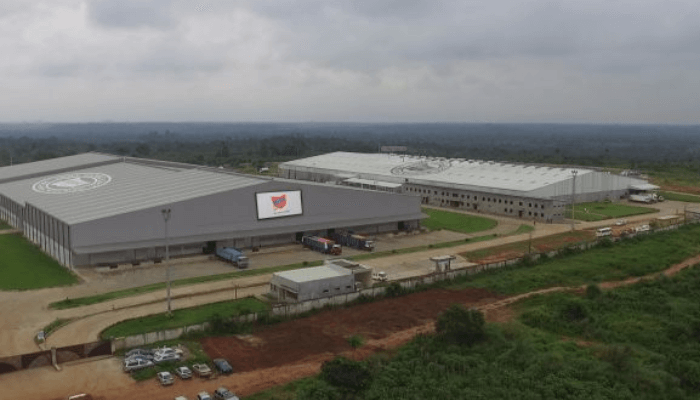
I must confess that I was not entirely prepared for what I encountered. Having visited and observed different industrial establishments in Nigeria, I had certain expectations about what a manufacturing facility of this magnitude would look like. I anticipated the familiar sight of towering generators, considerable industrial noise, diesel-powered operations and the general bustle associated with large-scale manufacturing. I also instinctively scanned the environment for the presence of expatriate technical personnel, something I had come to associate with major industrial establishments.
But Ososa presented a different picture.
The first thing that struck me was the tranquillity of the environment. Solar energy had replaced the kind of loud generator operations commonly associated with large industrial facilities.
There was no overwhelming generator noise, no visible diesel spillage on the factory floors and no obvious noise pollution. The surroundings were exceptionally neat, with an orderly arrangement that immediately communicated a commitment to a well-maintained working environment.
The atmosphere among the workers was equally remarkable. There was no running helter-skelter, no unnecessary commotion and no line manager shouting instructions across the production floor. Instead, operations appeared structured, with staff members carrying out their responsibilities in an organised environment.
I found myself wondering how a Nigerian-owned company had managed to build and sustain an industrial operation of this scale while maintaining such an atmosphere.
The hospitality was equally impressive. The restaurant served an excellent meal, and as we settled in, I knew my birthday was already off to a good start. I appreciate good food, and Rite Foods certainly did not disappoint.
One of the familiar faces who welcomed us was Ekuma Eze, Head of Corporate Affairs and Sustainability at Rite Foods. Having met him on a few previous occasions, it was particularly interesting to listen as he took us through the company’s history, evolution and journey.
One name stood out during his presentation: Phototech.
Interestingly, my earliest encounter with the Phototech story was not through a corporate publication or business documentary. It was through my editor at EchoNews, Kunle Awosiyan.
He would occasionally recount his experiences as a young graduate at Phototech, where he rose to become a branch manager. Whenever he spoke about those years, there was always a noticeable sense of fulfilment in his voice.
So, hearing about Phototech’s transition into what is today Rite Foods gave me a different perspective on the company’s evolution. It was no longer just another corporate history being presented to visitors. It was a story that connected with something I had heard from someone whose professional journey I respected.

Founded in 2007, Rite Foods Limited is a subsidiary of Ess-Ay Holdings Limited, a Nigerian holding company. Its growth reflects the vision of its founder, Alhaji (Dr.) Sulaiman Adebola Adegunwa, and an investment in building a competitive presence in Nigeria’s food and beverage industry.
By the time the presentation ended, I was even more eager to see the operations for myself.
Following the distribution of personal protective equipment, we proceeded to the production facilities. This was where my curiosity turned into genuine admiration.
Earlier, Ekuma had explained that Rite Foods operated with a Nigerian executive leadership team. I had listened, but a part of me still expected to encounter a significant expatriate presence when we got to the production floor.
Instead, I saw Nigerians occupying operational roles, supervising processes and working alongside sophisticated machinery. The sight reinforced an important point: indigenous expertise is not merely something to be celebrated in speeches; it is a capacity that can be developed, deployed and trusted to deliver results.
I must commend Dr. Adegunwa for the vision and investment behind the company, as well as the management team led by Managing Director Seleem Adegunwa for sustaining its operations and pursuing its growth ambitions.
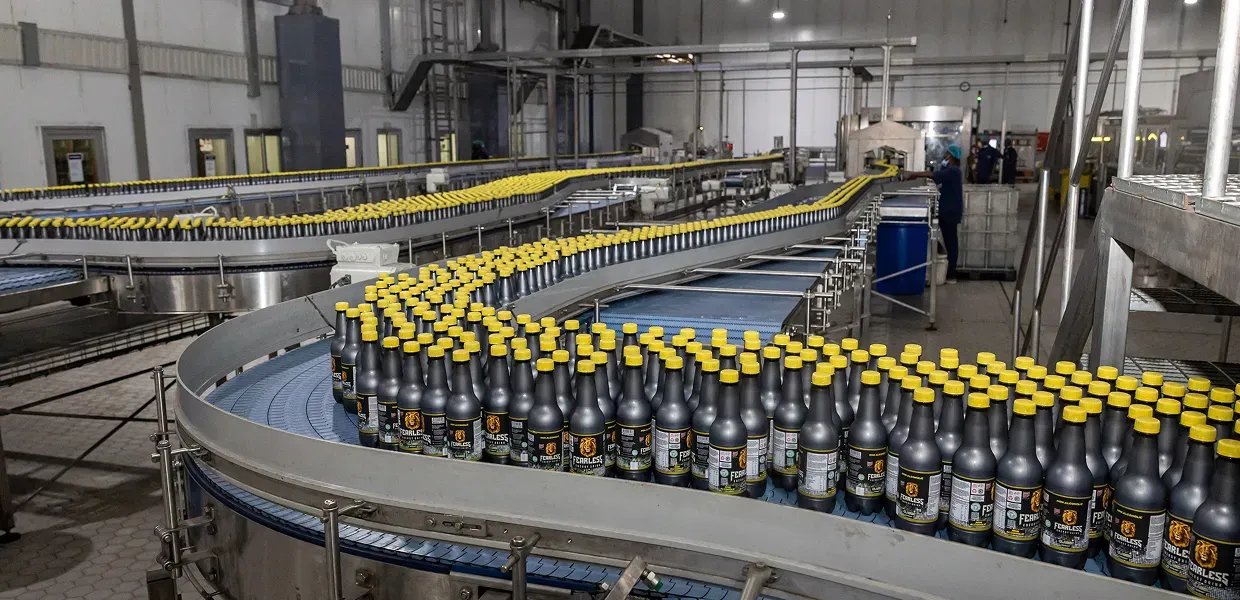
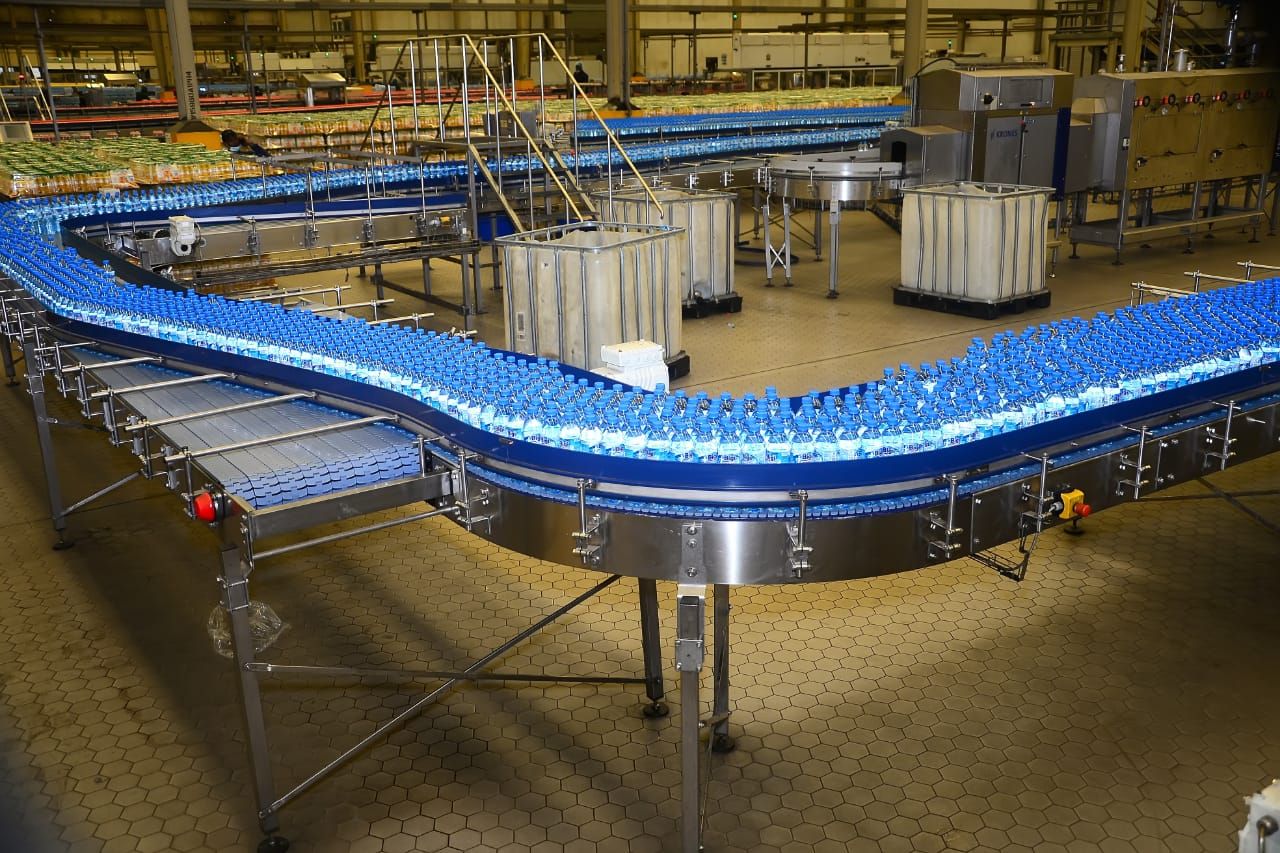
What impressed me particularly was the level of automation across the production facilities. I watched as sophisticated machines carried out several stages of the manufacturing process with remarkable precision and coordination. From filling the bottles and securely capping them to applying product labels and arranging the finished bottles for onward movement, the machines handled the processes seamlessly, while staff members supervised operations and monitored the production lines.
It was fascinating to watch the entire process unfold. What might ordinarily require considerable manual effort in some manufacturing environments was being handled through an organised system of automated operations. The sausage production facility offered another dimension of the experience, with workers actively involved in different stages of production.
For a moment, I caught myself saying, that someone should inform the Managing Director, Seleem Adegunwa, that I would not mind working here or becoming one of the company’s brand ambassadors.
And I meant it!
Beyond the impressive infrastructure, there was something appealing about the working environment, the organisation of activities and the visible involvement of young Nigerians. It was refreshing to see an industrial establishment where technology and human expertise worked together, rather than a workplace defined by unnecessary pressure and disorder.
The experience also made me reflect on the broader significance of indigenisation.
Indigenisation should mean more than having a Nigerian name attached to a business. It should involve developing local leadership, empowering professionals, building technical expertise, creating employment and demonstrating that Nigerian-owned enterprises can compete in demanding industries.
Rite Foods presents an interesting example of this possibility. Its Nigerian ownership, indigenous executive leadership and investment in manufacturing infrastructure demonstrate the importance of building institutions that create value within the domestic economy.
The implications extend beyond the company’s immediate workforce. Manufacturing supports a wider network of economic activities, including transportation, distribution, retail, logistics and other services. Every investment in productive capacity creates opportunities for businesses and individuals along the value chain.
This is why companies such as Rite Foods deserve serious attention in conversations about Nigeria’s industrial development. A country cannot achieve sustainable economic growth by relying solely on imported products while neglecting the capacity of its own enterprises to manufacture, innovate and compete.
A vision anchored in leadership and an enduring legacy
One aspect of the company’s presentation that deserves particular attention is its corporate vision: to be the leader in its chosen fields of operation, leading to growth, stability and an enduring legacy.
It is an ambitious aspiration, but leadership in manufacturing must be demonstrated through more than market presence. It requires consistency, innovation, operational efficiency, product quality and the ability to maintain consumer confidence.
My observations at Ososa offered an opportunity to appreciate some of the foundations necessary for pursuing that ambition. From its investment in modern production facilities to its emphasis on indigenous expertise and an organised working environment, Rite Foods appears conscious of the importance of building an institution capable of sustaining its relevance.
An enduring legacy is ultimately measured by what an organisation leaves behind: the people it develops, the opportunities it creates, the standards it establishes and the value it delivers to society.
That is a corporate ambition worth pursuing.
And just when I thought the experience had given me enough to reflect on, another product was introduced: Lida Malt.
I will leave the detailed description to individual taste buds, but I must confess that it was a pleasant discovery. If you have not tasted Lida Malt, you might want to add it to your list of beverages to try.
What would an impressive manufacturing facility mean if its products could not earn a place in the everyday lives of consumers? This is where Rite Foods’ product portfolio becomes an important part of its story.
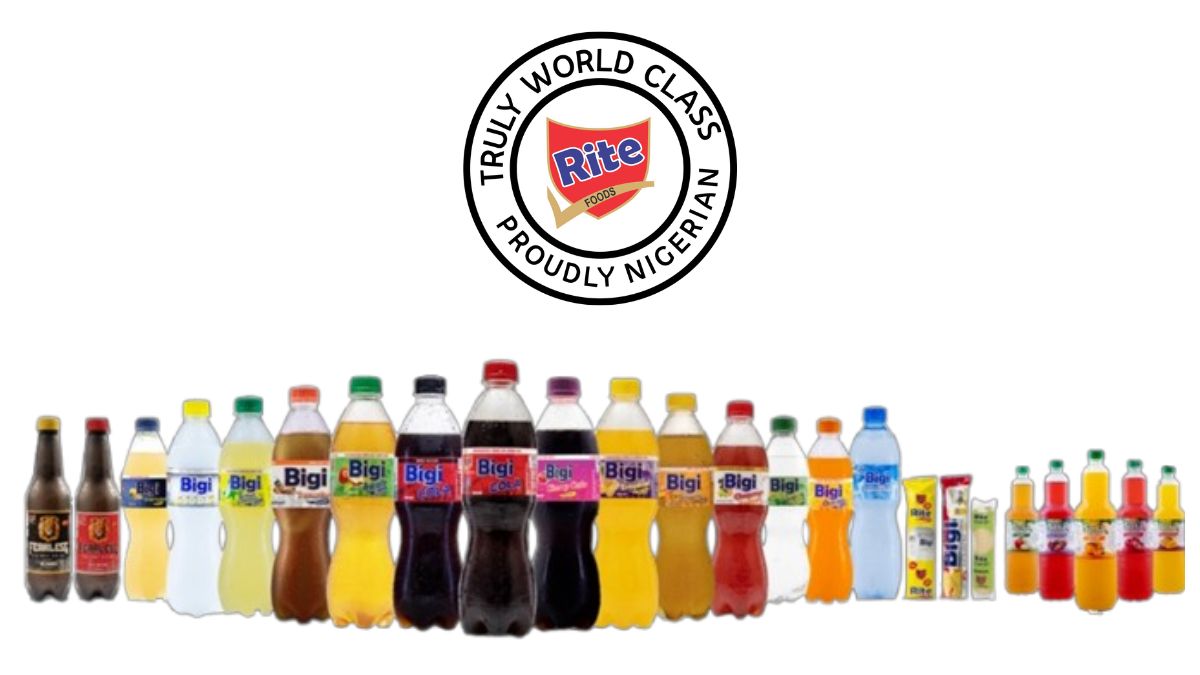
From Sosa to Lida Malt, Bigi beverages, Fearless Energy Drink, premium drinking water and its sausage range, the company has developed products targeting different consumer preferences and occasions.
Indeed, Rite Foods products are real enough to win on taste and real enough to win every day.
For me, this is where the company’s ambition must ultimately connect with the consumer. Beyond the infrastructure, corporate vision and impressive production processes, products must continually earn public confidence through quality, consistency, safety and taste.
Nigerian households should therefore give qualified indigenous products serious consideration when making everyday purchasing decisions. Supporting local manufacturers should not be an occasional expression of patriotism; it should be part of a broader appreciation of the economic value of domestic production.
The responsibility also extends to government institutions, private organisations, hospitality businesses, event planners and corporate establishments. Where locally manufactured products meet the required quality, safety and regulatory standards, they deserve fair consideration in procurement decisions.
I also believe that Nigerians must learn to support enterprises that are making deliberate investments in the country rather than being quick to discourage, discredit or bring them down. Building a manufacturing business in Nigeria comes with enormous responsibilities and challenges, and companies that commit their resources to creating jobs, developing local expertise and producing for the domestic market deserve encouragement and constructive engagement.
We cannot continually demand that Nigerian businesses grow, compete internationally and create employment opportunities while failing to support their efforts at home. Where there are shortcomings, they should be addressed through constructive criticism and a demand for higher standards, not through a culture of needless negativity aimed at frustrating genuine enterprise.
Rite Foods, like every business, should remain accountable to consumers and regulators, but Nigerians must also recognise the value of its investment in the local economy. We should support its legitimate efforts, celebrate its achievements and encourage it to keep raising the bar. Bringing down businesses that are contributing to our economic development does not serve the national interest. Building them through patronage, fair criticism and constructive support does.
Government, in particular, can contribute to the growth of domestic manufacturing through policies that encourage local investment, fair competition and responsible patronage of qualified indigenous producers.
Every purchase contributes to demand, and sustained demand supports production, distribution, employment and investment. However, local patronage must always be backed by product quality and the manufacturer’s ability to meet consumer expectations.
Rite Foods has an opportunity to strengthen that relationship with Nigerians by continuing to deliver products that consumers can confidently choose and enjoy.
By the end of the tour, my initial curiosity had given way to something deeper. I had arrived at Ososa expecting a factory visit, but I was leaving with a renewed appreciation of what Nigerian-owned enterprises can achieve when vision, investment, technology, environmental consciousness and local expertise come together.
There is a tendency to celebrate foreign brands and international business success stories while overlooking the remarkable work being done by companies that have invested in Nigeria and its people. That attitude deserves to change.
Rite Foods’ story is not simply about beverages, snacks and other consumer products. It is about Nigerian entrepreneurship, industrial development, indigenous leadership, employment and the possibilities that emerge when local businesses are given room to grow and compete.
And perhaps that was the best birthday gift of all.
Do you have a news to share with us, or you would like to partner with us or make advert enquiry or support Kindly reach out to us on +2348036828367.