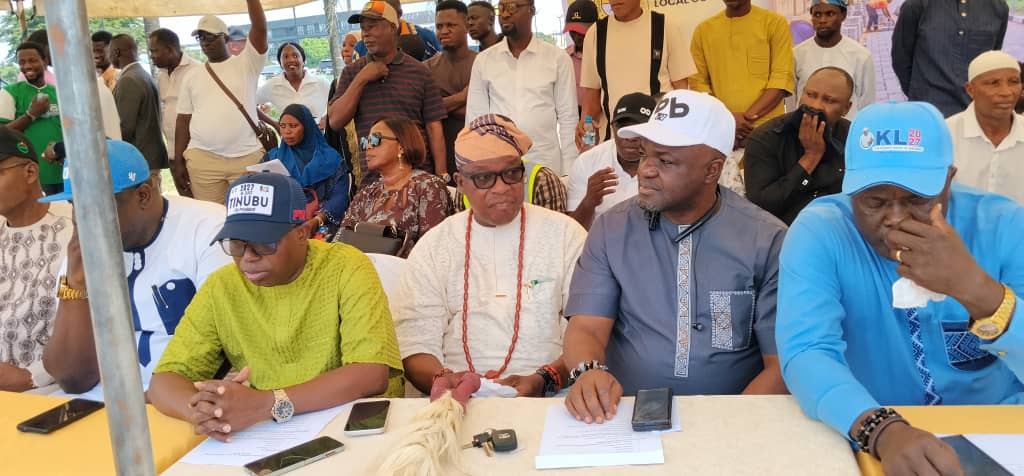
Ibeju-Lekki Local Government has concluded a stakeholders’ engagement ahead of the commencement of the 1,000-metre Gbetu–Iwerekun Road Project, with Chairman Hon. (Engr.) Abdullahi Sesan Olowa announcing plans to extend the construction by an additional 800 metres as part of a gradual effort to improve connectivity towards the Olokonla axis.
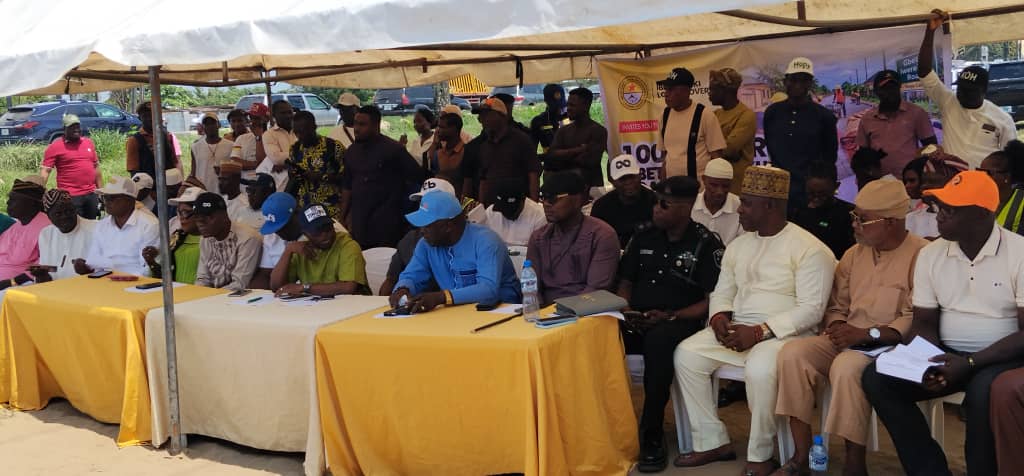
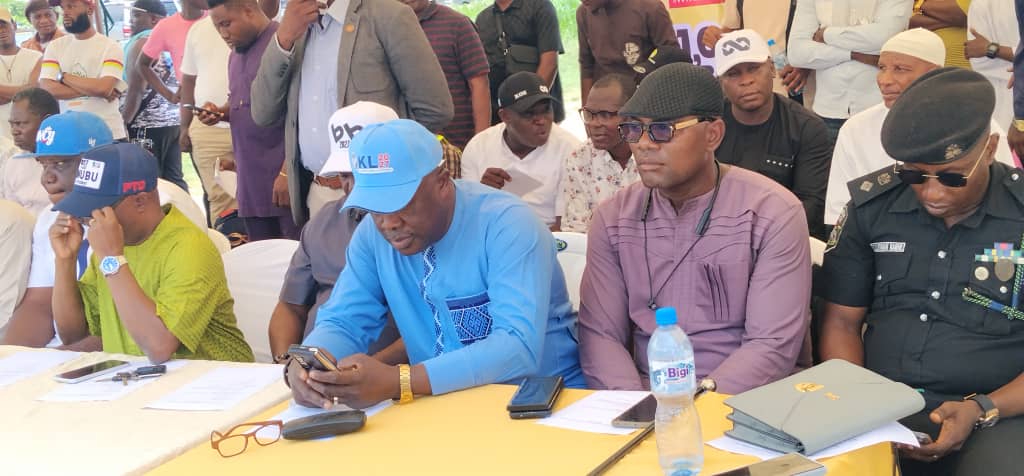
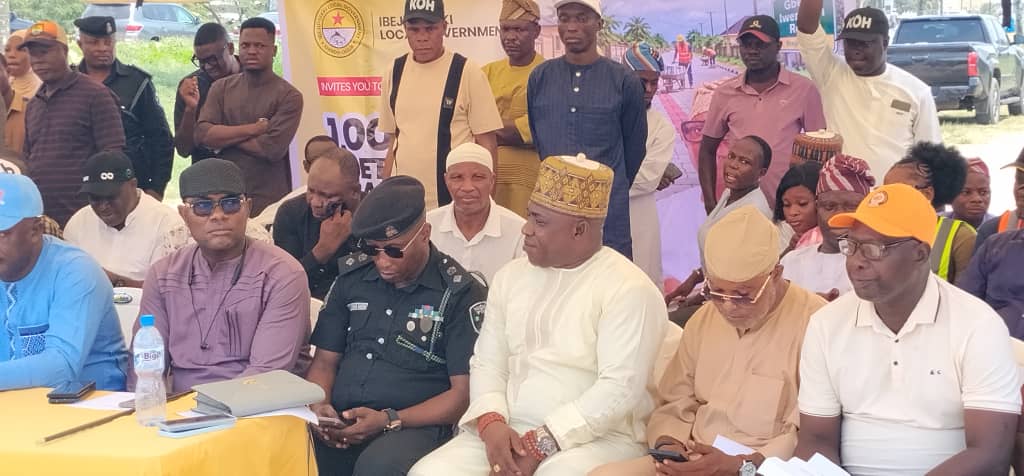
The engagement, held on Monday, November 9, 2026, at New Road Bus Stop, Iwerekun–Gbetu Road, brought together traditional rulers, political leaders, community representatives, property owners, residents and other stakeholders to discuss the project’s scope, implementation arrangements and the cooperation required for its successful delivery.
The meeting provided an opportunity for stakeholders to review the proposed construction layout, discuss movement arrangements during the construction period and address issues that could affect the smooth execution of the project before the contractor mobilises to the site.
Addressing the gathering, Chairman Olowa described the Iwerekun–Gbetu Road as a critical access route within the local government, noting that its deteriorating condition and persistent flooding had continued to affect residents, property owners, businesses and other socio-economic activities in the area.
He recalled his administration’s engagements with the community dating back to 2022, when assurances were given that the longstanding challenges associated with the road would be addressed. Acknowledging the reservations created by previous unfulfilled expectations, the Chairman said his administration was determined to move beyond promises and deliver infrastructure that would provide lasting benefits.
He explained that the first phase would cover 1,000 metres of road construction, with drainage channels on both sides and solar-powered streetlights. He further announced that another 800 metres would be undertaken as the first phase approached completion, with the broader objective of progressively extending the project towards the Olokonla axis.
Olowa stressed that the intervention was designed as a lasting infrastructure solution rather than a temporary palliative, explaining that the drainage system would be an essential component of the construction because of the area’s environmental and topographical conditions.
He assured residents that attention would be given to construction quality, proper road finishing and the supporting infrastructure required to ensure durability.
“Our intention is to deliver infrastructure that will stand the test of time. We are not just interested in constructing a road that will look good at the point of completion; we want a road that will continue to serve the people for many years. That is why proper drainage and other supporting facilities are important parts of this project,” he said.
The Chairman also highlighted the economic benefits expected from the project, noting that improved road access, effective drainage and street lighting would make the community more attractive to prospective residents, property developers and business operators.
He explained that improved infrastructure could significantly increase property values, encourage new occupants to settle in the area and stimulate commercial and residential development. According to him, the project would help reposition the Gbetu–Iwerekun axis by making movement easier and creating a more favourable environment for investment.
To demonstrate his administration’s approach to infrastructure development, Olowa highlighted completed projects, including the Lakowe–Loshoro–Lagasa Community Road and the Shapati Road, which connects the Lekki–Epe Expressway to Shapati Canal.
He noted that the Shapati Road project included drainage channels on both sides and a two-box culvert across the canal. He also disclosed that both projects were executed with local government resources without recourse to bank loans.
On the financial capacity of local governments, Olowa discussed the impact of the economic reforms introduced by President Bola Ahmed Tinubu, particularly fuel subsidy removal and the financial autonomy framework for local governments.
He explained that the increased resources available to local governments had created opportunities for councils to undertake more developmental projects and address critical infrastructure needs within their communities.
He urged residents and stakeholders to assess the impact of the reforms through the infrastructure and development projects being undertaken at different levels of government, noting that his administration was committed to translating available financial opportunities into tangible benefits for the people of Ibeju-Lekki.
The Chairman also raised concerns about the local government’s revenue allocation in relation to its growing population. He observed that the allocation remained largely tied to the 2006 national census figure of approximately 99,000 people, despite the area’s significant population growth and voter registration figures exceeding 200,000.
He expressed optimism that a new national census would provide a more realistic population assessment and help improve the local government’s revenue allocation to meet the increasing developmental demands of its communities.
On the drainage component, the Council Mayor explained that open drainage channels had been deliberately incorporated into the project to allow for easier inspection, cleaning and maintenance.
He expressed concern over indiscriminate waste disposal and poor maintenance practices, which often lead to blocked drainage systems and subsequent flooding. He therefore appealed to residents to embrace proper environmental sanitation and take collective responsibility for protecting the drainage infrastructure.
He further disclosed that the Lagos State Government had approved the dredging of the Ikota Canal, which forms part of the area’s drainage network and empties into the Lekki Lagoon.
The proposed dredging is expected to improve water discharge and drainage flow, helping to address recurring flooding challenges in Iwerekun–Gbetu and neighbouring communities.
Olowa consequently appealed to traditional rulers, property owners, Community Development Associations (CDAs) and residents to take ownership of the project by cooperating with the engineers and contractor, particularly on road alignment and other construction requirements.
He also urged community members to protect construction equipment and completed facilities, explaining that temporary inconveniences during construction should be seen as necessary sacrifices towards achieving durable infrastructure.
In his welcome address, the Vice Chairman of the local government, Hon. Isiaka Yusuf Olatunji, described the Gbetu–Iwerekun Road as a significant intervention for the community, noting that its poor condition had made movement difficult for residents and other road users.
He stressed that the project would address challenges that had affected daily activities, transportation and economic opportunities within the area.
The Vice Chairman called on residents to support the council and cooperate with the contractor, emphasising that community participation would be essential to the successful delivery of the project.
The Council Manager, Dr. Adekoya Augustine, also highlighted the difficulties experienced by residents and motorists who regularly use the road.
He explained that the poor condition of the corridor had exposed vehicle owners to repeated mechanical problems, increased maintenance expenses and unnecessary delays. He noted that the situation had affected traders, workers, business operators and other residents accessing the community.
According to him, the construction would bring considerable relief to road users, improve accessibility and create better conditions for economic activities.
He added that improved road access could encourage more people to settle in the area, attract businesses and support property development, noting that good infrastructure remains an important factor in community growth.
Also speaking, the Council Engineer, Engr. Kamiyo Adetola, provided technical details of the project, particularly the drainage and streetlighting components.
He explained that drainage channels would be constructed on both sides of the road to improve water movement and address flooding challenges, while solar-powered streetlights would enhance visibility and security along the corridor.
According to him, the improved road would reduce the frequent vehicle repairs associated with damaged roads and make transportation more convenient for residents and other road users.
He further noted that better accessibility, drainage and street lighting could increase property values, attract new occupants and encourage residential and commercial expansion within the Gbetu–Iwerekun axis.
The contractor, Engr. Taiwo Musa of O2’s Development, assured stakeholders of the company’s commitment to delivering quality work in accordance with the approved project specifications.
He explained that attention would be given to the quality of materials, construction processes, road finishing and drainage requirements to ensure that the road serves its intended purpose.
He also assured residents that the company would work towards delivering durable infrastructure that would provide long-term benefits to the community, while appealing for cooperation from property owners and residents to ensure smooth construction activities.
The member representing Ibeju-Lekki Federal Constituency in the House of Representatives, Hon. Bayo Balogun, commended the initiative, expressing confidence that the project would bring further development to Iwerekun–Gbetu and the entire local government.
He noted that improved road infrastructure would create better opportunities for residents, support economic activities and contribute to the development of the area.
In his goodwill message, Hon. Engr. Abiola Okanlawon Olowu commended Chairman Olowa for his commitment to infrastructure development and expressed satisfaction with the proposed road intervention.
He recalled previous government interventions following flooding incidents in Ketu and Oworonshoki and also highlighted his personal contributions towards facilitating the installation of two transformers in the community.
Emphasising the principle that “to whom much is given, much is expected,” he encouraged continued commitment to community development and urged stakeholders to support initiatives capable of improving the living conditions of residents.
Also present were candidates for the Lagos State House of Assembly seat representing Ibeju-Lekki Constituency I, alongside other political and community stakeholders.
The traditional ruler of Iwerekun, Oba Dr. Mufutau Olanrewaju Adewunmi Idogun Larrys, the Ologunfayo of Iwerekun, appealed to residents to cooperate with the local government and the contractor throughout the construction period.
The monarch emphasised that the project would provide lasting benefits to the community and urged property owners, residents and community associations to support the construction process, particularly where temporary adjustments might be required.
He encouraged the people to exercise patience, protect the construction process and work with the council to ensure that the project was completed successfully, noting that the entire community stood to benefit from the improved infrastructure.
Community representatives from Iwerekun, Gbetu and Abule-Parapo also expressed appreciation to the Chairman for his continued engagement with the area and his determination to address its longstanding infrastructure challenges.
They acknowledged his previous visits, consultations and interventions, particularly in relation to drainage problems, and expressed hope that the proposed construction would provide lasting relief to residents.
In his vote of thanks, the Secretary to the Local Government, Hon. Adebanjo Adewale Fasali, appreciated the traditional rulers, political leaders, community representatives and other stakeholders for attending the engagement.
He further appealed to the Baale, Community Development Associations and youths within the community to support the contractor and ensure a peaceful and cooperative working environment throughout the construction period.
The Gbetu–Iwerekun Road Project forms part of the infrastructure and environmental development priorities of Olowa’s SHIEELD Agenda. Beyond improving road connectivity, the proposed intervention is expected to address drainage challenges, enhance security through solar-powered streetlights, reduce transportation difficulties and create opportunities for increased property values and economic activities.
The decision to engage the benefiting communities before construction also reflects the importance of cooperation between the government and residents in delivering public infrastructure. With the proposed additional 800-metre extension, the administration has outlined a broader development plan that could progressively improve access towards the Olokonla axis.
As preparations advance for construction, the council has called for sustained cooperation from residents and stakeholders to ensure that the project is executed according to plan and delivers the intended benefits to the people.
Do you have a news to share with us, or you would like to partner with us or make advert enquiry or support Kindly reach out to us on +2348036828367.