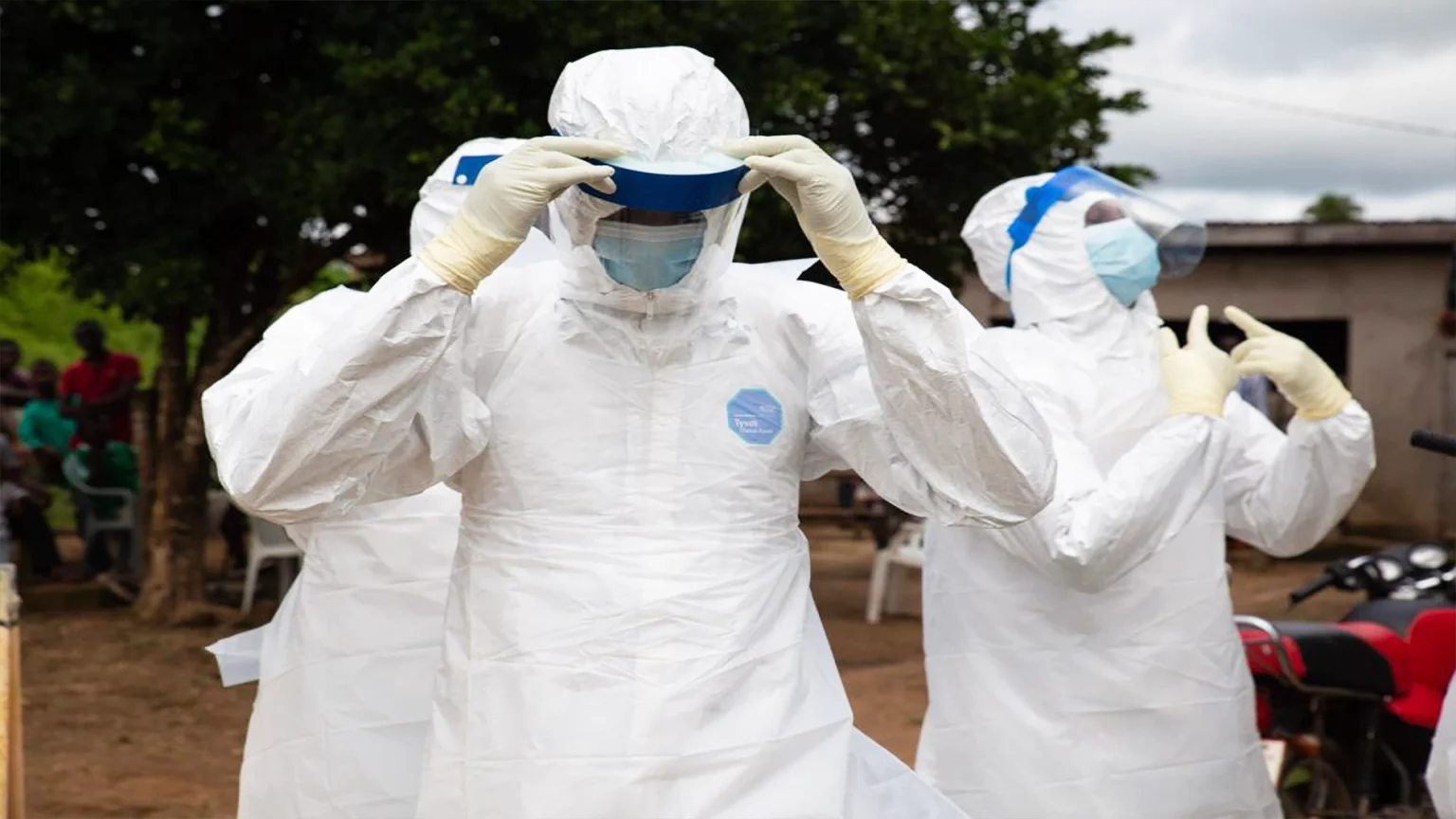
The World Health Organisation (WHO) has raised concern over a worsening Ebola outbreak in the Democratic Republic of Congo (DRC), with nearly 1,000 suspected cases and about 220 deaths recorded, as health authorities warn of increasing cross-border risk across the region.
WHO Director-General, Tedros Ghebreyesus, said the Ebola Bundibugyo virus outbreak in Ituri province is spreading rapidly under difficult conditions marked by insecurity, attacks on health facilities and population movement, making contact tracing and isolation of cases extremely difficult.
“We cannot build community trust or isolate the sick while bombs are falling,” Ghebreyesus said, warning that the situation is complicating response efforts.
The outbreak, which has spread beyond Ituri, is now reported across 11 health zones, with confirmed spread into North Kivu — including Butembo and Goma — as well as South Kivu, according to the United Nations Children’s Fund (UNICEF).
The Bundibugyo strain of Ebola, first identified in Uganda in 2007, currently has no approved vaccine or specific treatment, raising concerns among global health authorities as transmission continues across communities and health facilities.
Uganda has also stepped up emergency measures, announcing the temporary closure of its border with the DRC following seven confirmed cases linked to the outbreak, including healthcare workers and at least one death.
Uganda’s Ministry of Health said only authorised health personnel, humanitarian workers, and essential cargo transporters will be allowed entry under strict screening measures, while all arrivals from affected areas will undergo 21-day quarantine.
In response to rising misinformation, the Nigeria Centre for Disease Control and Prevention (NCDC) has warned Nigerians against relying on unverified home remedies such as bitter kola, salt water, herbs and seasoning cubes for prevention or treatment of Ebola.
In a public advisory titled “Ebola Virus Disease (EVD): Myths vs Facts,” the NCDC said there is currently no approved home cure for Ebola and urged citizens to report symptoms early and avoid self-medication.
“There is presently no approved home remedy for EVD. Early reporting, supportive medical care, and strict infection prevention and control measures are critical,” the agency stated.
Director-General of the NCDC, Jide Idris, said Nigeria remains at high risk due to cross-border movement and the difficulty of early detection of symptoms, despite not recording any recent confirmed case.
Health authorities across the region have intensified surveillance, particularly in border communities and schools, as fears grow over further regional spread of the virus.
The WHO and partner agencies continue to call for coordinated international response efforts to contain the outbreak and prevent further loss of lives.Headline Options
Do you have a news to share with us, or you would like to partner with us or make advert enquiry or support Kindly reach out to us on +2348036828367.