By Kehinde Micheal Adeleye
Every August, attention turns to Isese Day, a celebration of Yoruba indigenous culture, spirituality, history and identity. But beyond the ceremonies and public celebrations, Isese raises a broader question: how relevant is indigenous Yoruba tradition in a society where Christianity and Islam are now dominant religions?
For many Yoruba people, the answer is that tradition has never completely disappeared.
Isese, broadly understood as the Yoruba indigenous religious and cultural heritage, encompasses beliefs, festivals, ancestral traditions, language, names, music, arts, traditional institutions and communal practices passed down through generations.
While some Nigerians may identify strictly as Christians or Muslims, elements of Yoruba tradition continue to feature in everyday life, sometimes without being described as “Isese.”
It goes beyond religion
One of the common misconceptions about Isese is that it is solely about worship of traditional deities.
For many practitioners and cultural advocates, however, Isese also represents a connection to Yoruba history, values, customs and identity.
Traditional naming ceremonies, respect for elders, chieftaincy institutions, indigenous festivals, Yoruba proverbs, traditional music and certain marriage and burial customs are examples of cultural practices that have survived generations.
This explains why the influence of Yoruba tradition can still be found among people who identify as Christians or Muslims.
Christians and Muslims still participate in some traditions
Across Yoruba communities, it is not unusual to find Christians and Muslims participating in cultural festivals, traditional family ceremonies and other indigenous customs.
A Christian may attend an ancestral or community festival as a cultural event. A Muslim may participate in a traditional ceremony because of family or community ties.
For some, this does not necessarily mean abandoning their religious faith. Rather, they distinguish between religious worship and cultural identity.
However, where a traditional practice involves religious rites, sacrifices or invocation of deities, interpretations differ sharply among Christians and Muslims, with many choosing not to participate in such aspects.
Why Isese remains relevant
The continued interest in Isese is also part of a wider conversation about cultural preservation.
In a rapidly changing world, younger generations are increasingly searching for ways to understand where they come from, preserve indigenous languages and reconnect with traditions that may otherwise disappear.
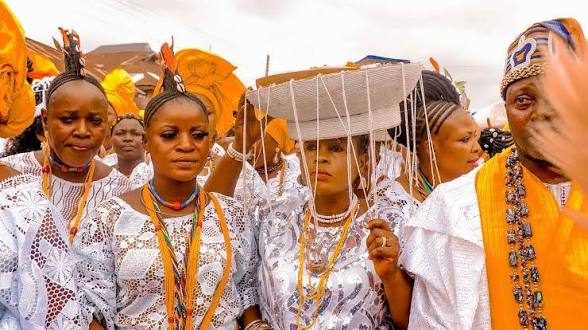
Isese celebrations provide an opportunity to showcase Yoruba music, dance, clothing, food, language, history, art and traditional institutions, while also creating platforms for cultural education.
A debate about identity
Isese Day also reflects the complicated nature of Nigerian identity.
Nigeria is deeply religious, but religion has existed alongside indigenous cultures for centuries. Christianity and Islam have significantly influenced Nigerian society, yet indigenous customs have continued to shape family structures, names, ceremonies, festivals and community life.
This has sometimes created tension, particularly when cultural practices are interpreted as religious practices.
The challenge, therefore, is finding a balance between religious conviction and cultural heritage.
Isese in modern Nigeria
The growing public recognition of Isese Day suggests that indigenous Yoruba identity is not disappearing.
Rather, it is being re-examined by a new generation that wants to understand its history while living in a modern, religiously diverse society.
For some, Isese is a spiritual path. For others, it is primarily a cultural heritage. For many Yoruba Christians and Muslims, elements of the tradition remain woven into their family and community identity, even when they do not participate in its religious dimensions.
Ultimately, the relevance of Isese may lie in its ability to preserve the memory of a people.
You can change your religion, live in another country, adopt modern lifestyles and still carry the language, names, values, customs and history of your ancestors. That enduring connection is part of why Isese continues to matter.
Do you have a news to share with us, or you would like to partner with us or make advert enquiry or support Kindly reach out to us on +2348036828367.