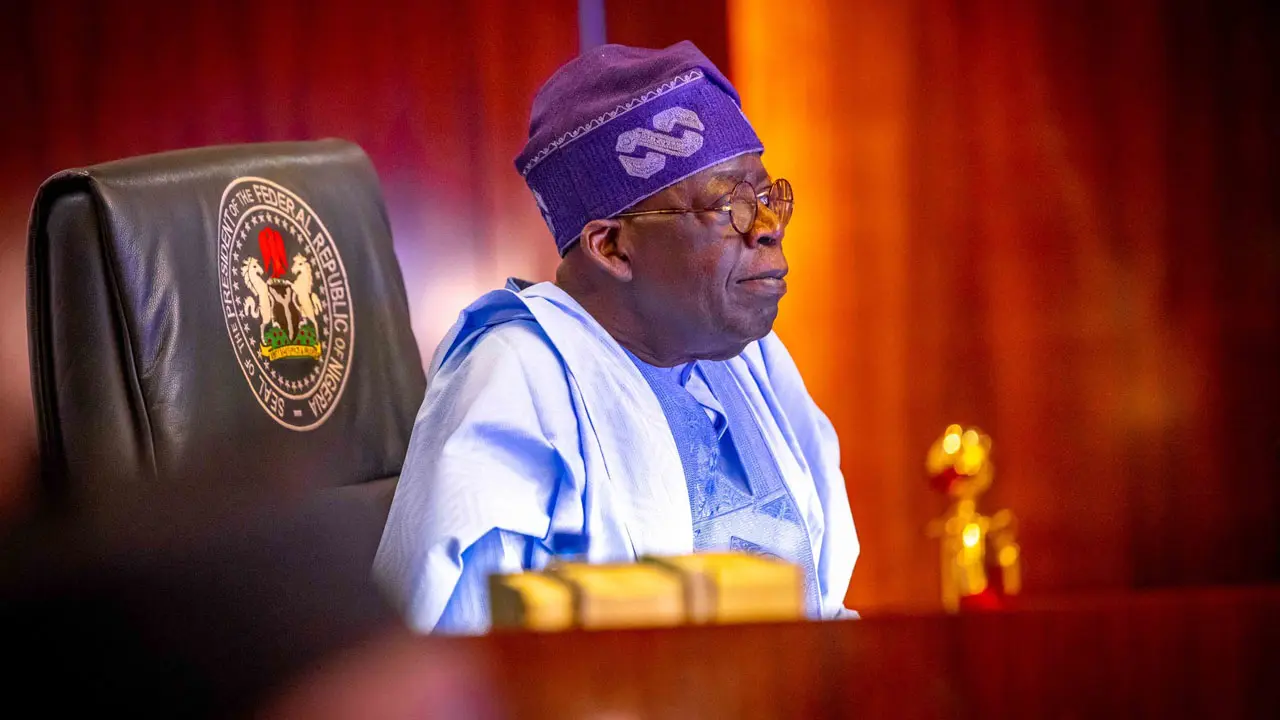
President Bola Tinubu has approved the establishment of the University of Public Relations and Leadership, a specialised institution aimed at advancing education, research and professional development in public relations and strategic communication.
Tinubu, represented by Vice President Kashim Shettima, announced the approval on Wednesday while addressing participants at the 2026 World Public Relations Forum (WPRF) in Abuja.
He described the proposed university as a first-of-its-kind initiative and a lasting legacy of Nigeria’s hosting of the global public relations gathering.
According to the President, the institution will provide opportunities to train a new generation of communication professionals and leaders capable of responding to the demands of a rapidly changing global environment.
He commended the Nigerian Institute of Public Relations (NIPR), the Federal Ministry of Information and National Orientation, and the Nasarawa State Government for their collaboration towards making the initiative a reality.
Tinubu urged relevant stakeholders to work together to establish the university as a centre of excellence with national, continental and international recognition.
He also challenged public relations and communication professionals to uphold high standards of ethics, transparency, accountability and responsibility, particularly amid the growing threats of misinformation, disinformation and the challenges posed by artificial intelligence.
The President said communication professionals had responsibilities beyond managing public images and reputations, stressing their role in promoting truth, accountability, mutual understanding and constructive engagement between governments, institutions and citizens.
He reaffirmed the Federal Government’s recognition of communication as a strategic tool for national development, democratic governance, economic growth and international cooperation.
Tinubu also encouraged international delegates attending the forum to explore Nigeria’s investment opportunities, entrepreneurial ecosystem, creative industries, cultural heritage and tourism potential.
He described Nigerians as confident, resilient and hardworking, arguing that the country had much more to offer than the negative narratives often circulated on social media.
“Of the ten unicorns in Africa, six are in Nigeria: Flutterwave, Opay, Interswitch, Moove, Moniepoint,” he said.
He projected that Nigeria’s population would reach about 440 million by 2050, making it the world’s third most populous country.
The President also cited the achievements of Nigerians in business and the professional accomplishments of Nigerian immigrants abroad as evidence of the country’s human capital potential.
“The most outwardly mobile immigrant community in the United States is the Nigerian Americans. Sixty per cent of them have college degrees. So Nigeria goes beyond 419. Nigeria is much bigger than that,” he said.
He urged the delegates to build relationships with Nigerian institutions and businesses, explore partnerships and consider investment opportunities in the country.
“We hope that your experience here will encourage you to return, invest, collaborate, and become ambassadors of Nigeria’s positive story,” he added.
Meanwhile, African Ministers of Information have called for a coordinated continental communication framework to tackle misinformation, strengthen public trust and promote Africa’s voice internationally.
The call followed a high-level roundtable on responsible communication, where participants advocated stronger institutional cooperation, professional capacity building and regular consultations among African governments.
The Minister of Information and National Orientation, Mohammed Idris, said the growing influence of digital platforms and artificial intelligence had made credible communication a strategic priority for governments.
Citing Nigeria’s experience with manipulated videos and misinformation, Idris warned that false narratives could distort public events, create panic and undermine public confidence in government.
“Technology has come to stay. AI is here to help us if we use it properly. The challenge is to ensure that what we communicate is credible and honest,” he said.
He called for renewed cooperation among African information managers and proposed the revival of the Annual Conference of African Ministers of Information to strengthen policy coordination and enable the continent to speak with one voice.
“Collectively, we are stronger if we are united. There is a need to establish a robust system that enables us to look at Africa as one and speak with one voice once again,” Idris stated.
The minister also urged African countries to support Nigeria’s UNESCO Category 2 International Media and Information Literacy Institute in Abuja.
He called for stronger collaboration among public media institutions, including the Nigerian Television Authority (NTA), Federal Radio Corporation of Nigeria (FRCN), News Agency of Nigeria (NAN) and Voice of Nigeria (VON).
Kenya’s Cabinet Secretary for Information, Communications and Digital Economy, William Kabogo Gitau, highlighted his country’s National Communication Policy, adopted in August 2026, and plans to establish a National Communication Centre to provide verified government information and receive feedback from citizens.
He also advocated professional regulation of public relations and stronger cross-border cooperation to combat misinformation.
Similarly, the Minister of Communication and Media and Government Spokesperson of the Republic of the Congo, Thierry Lézin Moungalla, called for a continental framework for ministerial consultations, professional training, public-private media partnerships and joint content production.
Zimbabwe’s Deputy Minister of Information, Publicity and Broadcasting Services, Omphile Marupi, highlighted the country’s 16 community radio stations and grassroots information structures as tools for inclusive communication.
He called for improved media literacy, ethical journalism and greater African ownership of the continent’s narratives.
The Chairman of the Information and Communications Committee of Ghana’s Parliament, Abed-Nego Lamangin Bandim, advocated increased investment in government communication, expanded rural connectivity and improved welfare for journalists.
He disclosed that Ghana had earmarked 10 million Ghana cedis in its 2027 budget for journalists’ training, professional development and welfare.
The roundtable ended with participants expressing a shared commitment to strengthening communication cooperation across Africa, while Nigeria indicated its readiness to host the next meeting of African Ministers of Information.
Do you have a news to share with us, or you would like to partner with us or make advert enquiry or support Kindly reach out to us on +2348036828367.