You buy a bottle of Nestlé Pure Life in Lagos and that’s it. You drink it. You move on.
You don’t see Flowergate.
You don’t see the water meter ticking in the factory in Ogun State, or the filter room, or that small weighing scale in Agege where someone logs PET bottles one after the other.
But that chain you don’t see? That’s now where the real work of making food in Nigeria happens.
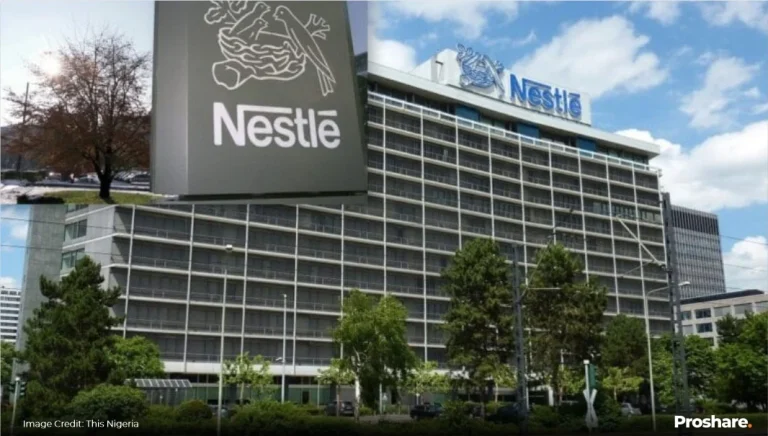
Nestlé Nigeria has three factories here — Flowergate, Agbara and Abaji. Flowergate makes the things we know too well: Golden Morn, Maggi, Milo. The problem it faces is the same one every big manufacturer faces here. How do you make more, without using more water, more energy, and leaving more plastic behind? In a country where waste collection is already stretched, it’s a hard balance.
The company says it is trying to break that link. The clearest place you can see it is plastic.
In Nigeria, plastic is not an abstract issue. It is blocked canals in Lagos after rain. It is dumpsites that burn through the night. It is packaging in rivers. A clean-up helps, but it doesn’t fix it.
As a founding member of the Food and Beverage Recycling Alliance, FBRA, Nestlé Nigeria has put money into a recovery system. It works with recyclers like Chanja Datti, Wecyclers and Maladase Ecopreneur. Through those partnerships, the company says over 61,000 metric tons of plastic have been diverted from landfills.
The question then is where does it go? In 2024, Nestlé Nigeria became the first in the country to put 50% recycled PET, rPET, into its water packaging. So the bottle you throw away can actually come back as a new bottle. In December 2023, it also announced 100% plastic neutrality — meaning it recovered the same amount it put into the market.
Those are national numbers. Inside the factory, it is much smaller, more personal. The Employee Plastics Collection Scheme runs at Agbara, Flowergate and Abaji and collected 1,163 kilogrammes in 2023. That will not solve Nigeria’s plastic crisis. No one claims it will. But it changes behaviour. When you start weighing and logging plastic at work, you start to see it as material, not waste.
Still, collecting is only one part. The real test is three things. How much is collected? How much of what is collected is actually turned into something useful? And how much of the packaging that is hard to recycle is being removed in the first place? The 50% rPET answers the second one. The third one — designing out the difficult stuff — is work the whole industry is still doing.
Water is the same story.
You cannot run a food factory without water. You cook with it, you clean with it, you cool and sterilise with it. In Ogun State, factory and community drink from the same source. How you use it matters.
Nestlé reports that its Agbara site has a wastewater treatment facility that treats the physical, chemical and biological properties of effluent before discharge, in line with Nigerian regulations. That is important infrastructure. But a facility existing is not by itself proof that water quality is better or that less water is used. You need the data.
At Flowergate, that data is tracked every day — how much water is withdrawn, how much is used per tonne of product, how much is reused or recycled. Some systems capture water from one process to use in another. Cleaning systems are tuned to use less water but still keep equipment safe.
And this is where you have to read the numbers carefully. A factory can use less water per tonne and still use more water overall if it is producing a lot more. You need both figures, year after year, to know if pressure on local resources is actually going down.
It is not just about inside the fence either. For communities around these factories, safe water and sanitation is not CSR. It is part of the same story. A borehole or a school WASH facility only counts if it works six months later, if the water is safe, and if someone is maintaining it.
Then there is energy, which is probably the hardest in Nigeria. The grid is unstable, fuel is expensive, most factories run their own generators. That makes cutting emissions complicated.
Flowergate, from what is reported, has focused on the basics that add up — boiler performance, heat recovery, tracking kilowatt-hours per tonne. These are not big solar announcements. They are small efficiency gains. But if they are sustained, they cut costs and emissions.
Here again you need two numbers: emissions per tonne and total emissions. One without the other does not tell you much. And beyond the factory, there are the indirect ones — the emissions from farms growing grains, trucks moving materials, companies making packaging. Those have to be counted separately.
The last part, the one that hardly makes the cover of any sustainability report, is the farm.
Nestlé’s products start with smallholder farmers. How healthy their soil is, whether they have water, how they cope when rains fail — that decides both supply and environmental footprint.
The practices being taught now include keeping soil covered, reducing tillage, composting, crop rotation and integrating trees. They can improve soil structure and help soil hold water. Nestlé Nigeria has expanded training for farmers in its supply chain.
But training is not the result. Adoption is. For a farmer, it means not burning residue but leaving it on the field, planting a cover crop, applying compost. The benefits — better organic matter, more stable yields, less fertiliser needed — may not show in one season. It may take three or four. So you have to measure beyond how many farmers were reached. You have to measure how many kept doing it and what changed.
By 2030, how we judge progress in this sector has to change.
Not by how many initiatives were launched, but by how many tonnes were truly recovered and recycled, how much water was reused, whether absolute emissions fell even as production rose, and whether farmers are more resilient than they were five years ago.
Flowergate is a good place to test that. It is relatively new, it was built with modern features, and it sits where industry, farming and communities meet.
If it can show, with factory-specific data that is comparable year after year and can be independently verified, that it is producing more while taking less and wasting less, then it would have answered the question its own banner raises.
That data. Not the banner. That is what will matter in the end.
Do you have a news to share with us, or you would like to partner with us or make advert enquiry or support Kindly reach out to us on +2348036828367.