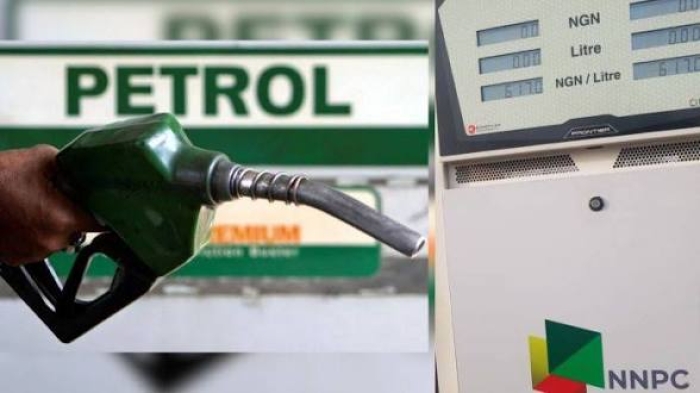
Nigeria has emerged as the global epicentre of fuel price shocks, recording the steepest increase in petrol prices worldwide as the Middle East war continues to rattle energy markets.
Fresh analysis from Global Petrol Prices shows that between February 23 and March 16, petrol prices in Nigeria surged by a staggering 39.5 percent, far outpacing every other country reviewed. The spike places Nigeria at the very top of the global inflation ladder for fuel, ahead of Laos at 32.9 percent, while Australia and Vietnam followed with identical increases of 31.8 percent. Even the United States recorded a comparatively lower rise of 23.6 percent.
Across Europe and other regions, the increases were notably milder. Spain recorded an 18.7 percent rise, Canada 17.2 percent, Germany 14.9 percent, and Egypt 14.3 percent, while France posted a 12.3 percent increase. China saw a 10 percent uptick, with Ethiopia at 7.9 percent, while the United Kingdom and the United Arab Emirates recorded similar movements at 6.5 percent and 6.4 percent respectively. At the lowest end, South Africa and Mexico posted marginal increases of just 1.0 percent and 0.5 percent.
The sharp divergence underscores how vulnerable Nigeria remains to global oil shocks despite its status as a major oil producer. The ongoing Middle East conflict has triggered one of the most severe supply disruptions in recent history, pushing crude prices to a four-year high and transmitting immediate pressure to domestic fuel markets.
Expectations that local refining capacity, particularly from the Dangote Refinery would cushion Nigerians from global volatility have so far proven optimistic. The refinery itself acknowledged earlier in March that it remains tied to international crude benchmarks, before raising its ex-gantry price to N1,175 per litre.
On the ground, the impact has been swift and unforgiving. Petrol prices now range between N1,130 and N1,350 per litre nationwide, depending on location and marketer. In Lagos, NNPCL outlets sell at about N1,130 per litre, while prices climb to over N1,260 in Abuja. Independent marketers in some regions now push prices as high as N1,350 per litre, deepening cost pressures on transport, food, and daily survival.
For millions of Nigerians, the global oil crisis is no longer a distant geopolitical event, it is a daily economic reality playing out at filling stations and in household budgets.
What to Know:
Nigeria’s record-breaking fuel price surge ultimately exposes a deeper structural weakness rather than just the impact of a distant war. Despite being an oil-producing nation, the country remains heavily tied to international pricing, leaving it dangerously exposed to global shocks it cannot control. As crude prices rise abroad, the effects translate almost immediately into higher transport costs, more expensive food, and tighter household budgets at home. For ordinary Nigerians, this is not an abstract economic trend but a daily struggle to cope with rising living costs. The contrast with countries that have managed to cushion their citizens highlights a critical gap in Nigeria’s energy security, where policy promises and local refining efforts have yet to provide real protection when it matters most.
Do you have a news to share with us, or you would like to partner with us or make advert enquiry or support Kindly reach out to us on +2348036828367.