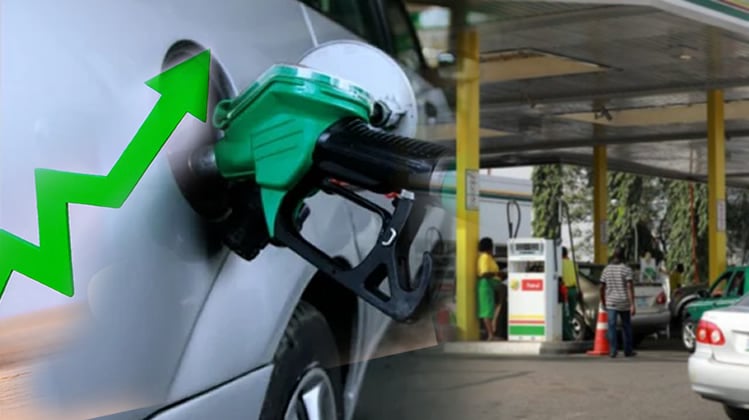
Industry experts on Saturday predicted a significant reduction in the price of Premium Motor Spirit (PMS), popularly known as petrol, by 2025, with prices possibly falling below ₦500 per litre.
The current price of petrol varies between ₦900 and ₦950 per liter at different filling stations.
The expected price decline is attributed to a robust downstream sector, driven by the federal government’s deregulation policies, stable exchange rates and increased domestic refining capacity.
Key factors driving price cuts
Increased local refining capacity: The commencement of operations at the Port Harcourt and Warri refineries, in addition to the Dangote refinery, is expected to boost local production and reduce dependence on imports.
The Dangote refinery currently injects seven million liters of petrol into the domestic market every day.
The Port Harcourt refinery, which started operations over a month ago, produces 1.4 million liters of gasoline daily.
The Warri refinery, which is operating at 60% capacity, focuses on the production of kerosene, diesel and naphtha.
Deregulation of the downstream sector: The deregulation policy has introduced competition between producers, which has lowered prices.
Industry experts, who spoke to Saturday Sun, noted that the price of petrol, which is currently selling for between ₦900 and ₦950 in many filling stations, could fall further to as much as ₦500 per liter during the year .
The National Publicity Secretary of the Independent Petroleum Marketers Association of Nigeria (IPMAN), Ukadike Chinedusaid in an interview with Saturday Sun that the entry of multiple players is already promoting healthy price competition.
He noted that the federal government’s policy of selling crude oil to refineries in return for payment in naira is expected to curb inflation and ease pressure on foreign exchange.
Chinedu highlighted the reduction in fuel prices by major players including the Nigerian National Petroleum Company Limited (NNPCL) and Dangote Refinery as evidence of the benefits of multiple sources of production.
As market conditions improve, modular refineries, which currently produce only diesel, plan to add gasoline refining to their operations. There are 25 licensed modular refineries in Nigeria, five of which are currently in operation.
He said: “As you can see, NNPC has reduced the ex-depot price from ₦1,045 per liter to ₦899 per liter for marketers, which translates to ₦925 per liter at the pumps for the end users. I must say that this is very commendable. These are not small drops, but huge drops from ₦1,045 to ₦899 ex-depot are a lot of drops.”
On the other hand, he said Dangote Refinery has also made a similar ex-depot price reduction from ₦970 to ₦899.50 per litre.
He pointed out that with the consistent availability of petroleum products, competition will arise and the prices of petroleum products will further decline in the new year.
The Publicity Secretary of the Crude Oil Refiners Association of Nigeria (CORAN), Iche IdokoWhile giving his views, Nigerians said they would gradually witness the gains typical of a deregulated market.
He said: “Price decline is one of the features of deregulation that we have highlighted. As the industry settles into the regime of complete deregulation, we will undoubtedly see competition between players, which will ultimately benefit consumers.”
According to him, these competitions will be over prices, product quality and lines of credit available to bulk buyers.
Do you have a news to share with us, or you would like to partner with us or make advert enquiry or support Kindly reach out to us on +2348036828367.