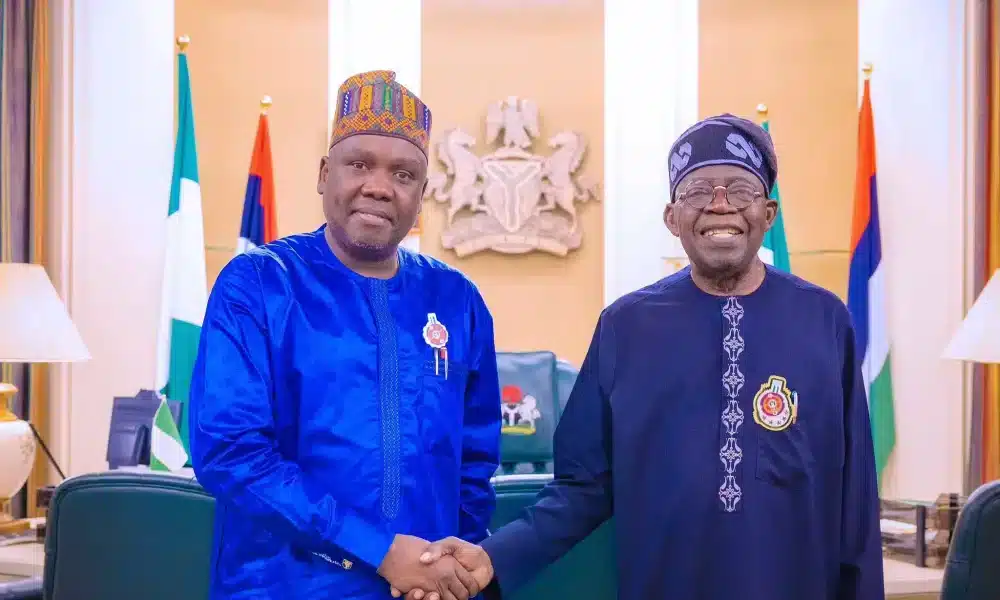
Daniel Bwala, Special Adviser on Policy Communications to President Bola Tinubu, has defended the controversial tax reform bills currently before the National Assembly, saying they are in line with the President’s manifesto and campaign promises.
Speaking on this, Bwala stressed that the reforms, including the proposed change in the distribution of Value Added Tax (VAT) revenue, reflect Tinubu’s vision for a fairer tax system in Nigeria.
The bills are: The Nigeria Tax Bill 2024, which is expected to provide the fiscal framework for taxation in the country; and the Tax Administration Act, which will provide a clear and concise legal framework for all taxes in the country and reduce disputes.
Others include: the Nigeria Revenue Service Establishment Bill, which will repeal the Federal Inland Revenue Service (FIRS) Act and establish the Nigeria Revenue Service (NRS), and the Joint Revenue Board Establishment Bill, which will establish a tax tribunal and a tax ombudsman will create. .
Speaking on Trust TV’s Sunday Politics programme, Bwala said it was not an obsession but was in fact part of the president’s mandate.
Bwala said: “You remember when he campaigned, he campaigned on those promises. And it’s actually summarized in his manifesto. So he is trying to fulfill his promise to the Nigerian people. And so there is no obsession. It is a passion to achieve good governance.
“And the reason why you hear the outrage and the belief that the tax law is against the North is because some stakeholders in the North are lending their voice in that regard. In other words, people are ventilating the politicization of the bill because, frankly, many of them haven’t looked at the bill. I mean, some of the supporters of the bill are Northerners.
“If you look closely at that bill, it is actually about the harmonization of all tax laws in the country to achieve efficient tax administration in Nigeria. I want to tell you a few things about that. It is divided into four different laws. You have the Nigerian tax bill, which is obviously the model or development of the entire tax administration.
“So, apart from the tax bill, you have the bill from the Nigerian tax authorities. We have the Tax Authorities Establishment Act. We also have the bill for the establishment of a joint revenue council.
“Nigerians will benefit greatly from the tax bill. For example, the exemption from tax payment for persons earning less than N800,000. Isn’t it wonderful? Because until now, even if you earn N800,000 or earn less than N800,000, you have to pay certain taxes.
“But in this tax authority, you do not have to pay tax if your annual income is less than N800,000. And that has nothing to do with the north or the south. And those earning, say, N50m will pay 25% of their income rate.
“But under the current law, even if it is N3.2 million, you still have to pay tax. This is the exemption for companies from paying income tax. If the annual income of the company is less than N50 million, the reduction in corporate tax rate from 30 to 25 also applies.
The presidential aide also mentioned some benefits of tax harmonization.
“First, the private citizens. Second, the income earners, people who work, were working class. And the third, those who do small-scale business, such as SMEs, because we need to encourage small and medium-sized businesses.
“And fourth, of course: companies that are small or large in themselves. And then of course, the coordination of taxes so that we don’t have all these taxes wrapped up in different laws, ultimately making the implementation or administration of the tax a responsibility for the Nigerian people.” Bwala said.
Do you have a news to share with us, or you would like to partner with us or make advert enquiry or support Kindly reach out to us on +2348036828367.